

hOw financial INSTITUTIONS market their high tier cards
Hey everyone, I’m Laurence, a videographer and brand strategist. I’m always analyzing how businesses message themselves to us and I’m a big fan of financial products and the explosion of high tier credit cards has caught my eye.
Credit Cards as a luxury good
The most famous credit card advertising campaign is mastercard’s “Priceless” headed by Joyce King Thomas and Jonathan Cranin of the McCann-Erickson agency. The first priceless commercial aired in 1997 and looked to shift the credit cards from a practical item to an emotional experience.
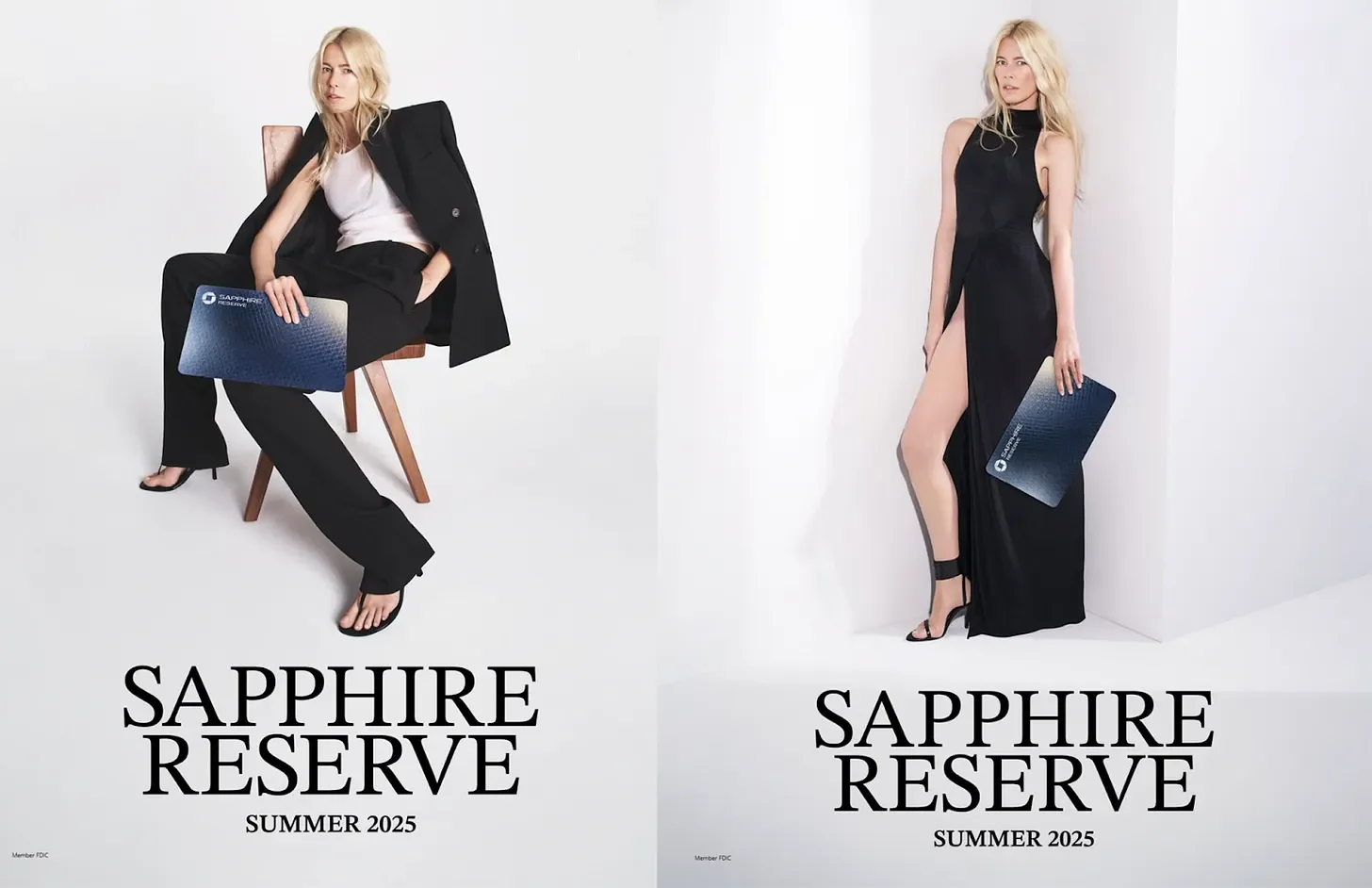
From priceless to now there’s been an explosion in emotional & experiential credit card branding and marketing. In the images above we see the supermodel Claudia Schiffer posing with an enlarged Chase Sapphire Reserve (annual fee $795.) With the exception of the card, this ad looks like any other luxury goods advertisement that you’d see in the middle of Vanity Fair where the model would be holding a purse, except the enlarged card in place of a traditional luxury good signals to the viewer that the credit card, with its ~$800 yearly fee is the luxury good. Further taking the idea of a credit card from a tool to the end product within itself. The credit card is no longer the journey but the destination.
Community through your card
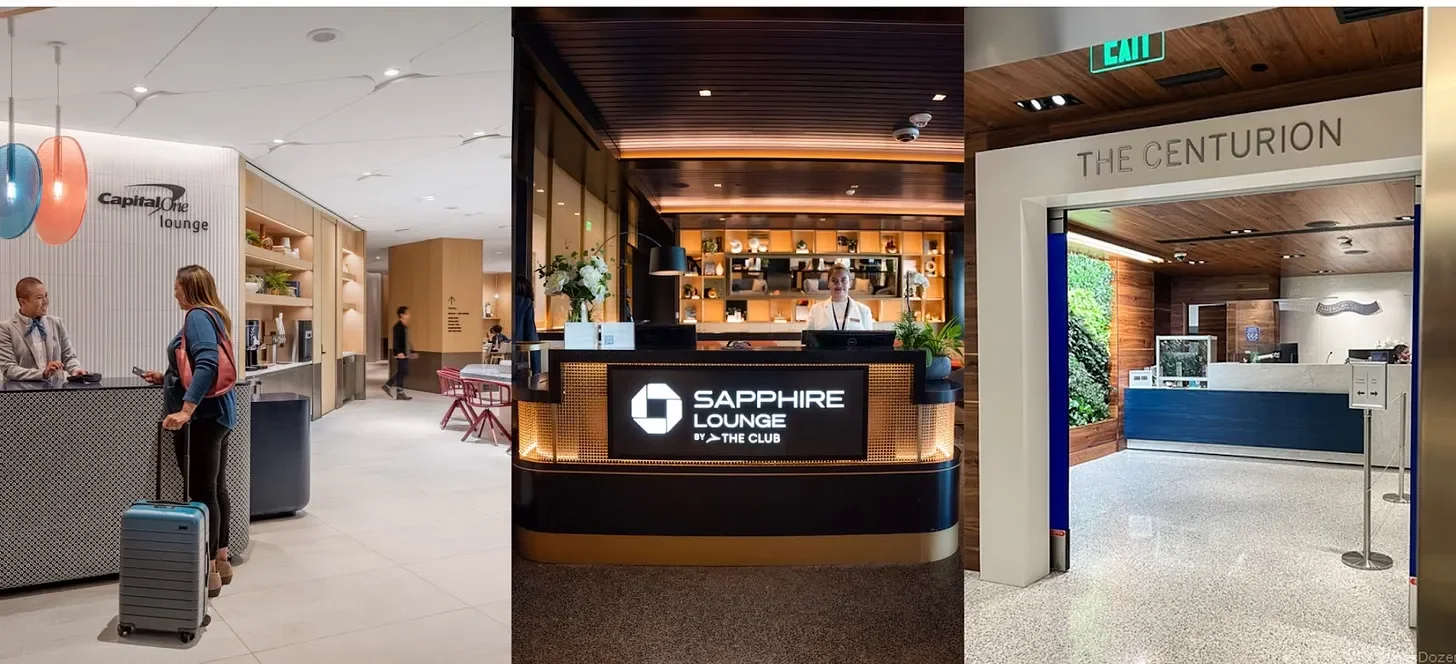
There’s another essay I could write about everyone being lonely, no one having sex, no one building community and looking for fulfillment through travel that they can't really afford but I’ll save that for another time. However, these financial companies may be taking advantage of Millennial and Gen-Z loneliness and experience culture with their high tier cards that all come with airport lounge access with Millennials and Gen-Z now making up 75% of new accounts for Amex’s Platinum and Gold cards. I have never felt more social at the airport than when I experienced the Capital One lounge and their free drinks for the first time as a Venture X card holder (annual fee $395) or the Amex Platinum Centurion Lounge (annual fee $695) with a girl I was dating. These lounges offer a sense of exclusivity, of being above average and of a community even if you don’t speak to another soul while you’re in there. You still get that feeling of being in an environment that makes you somewhat different from the rest even if your reality doesn’t exactly paint that picture. At least you get to feel it before you head to your gate to board your flight and sit in seat 22E. The free food and drinks, the better wifi, and comfortable seating always make it worth it.
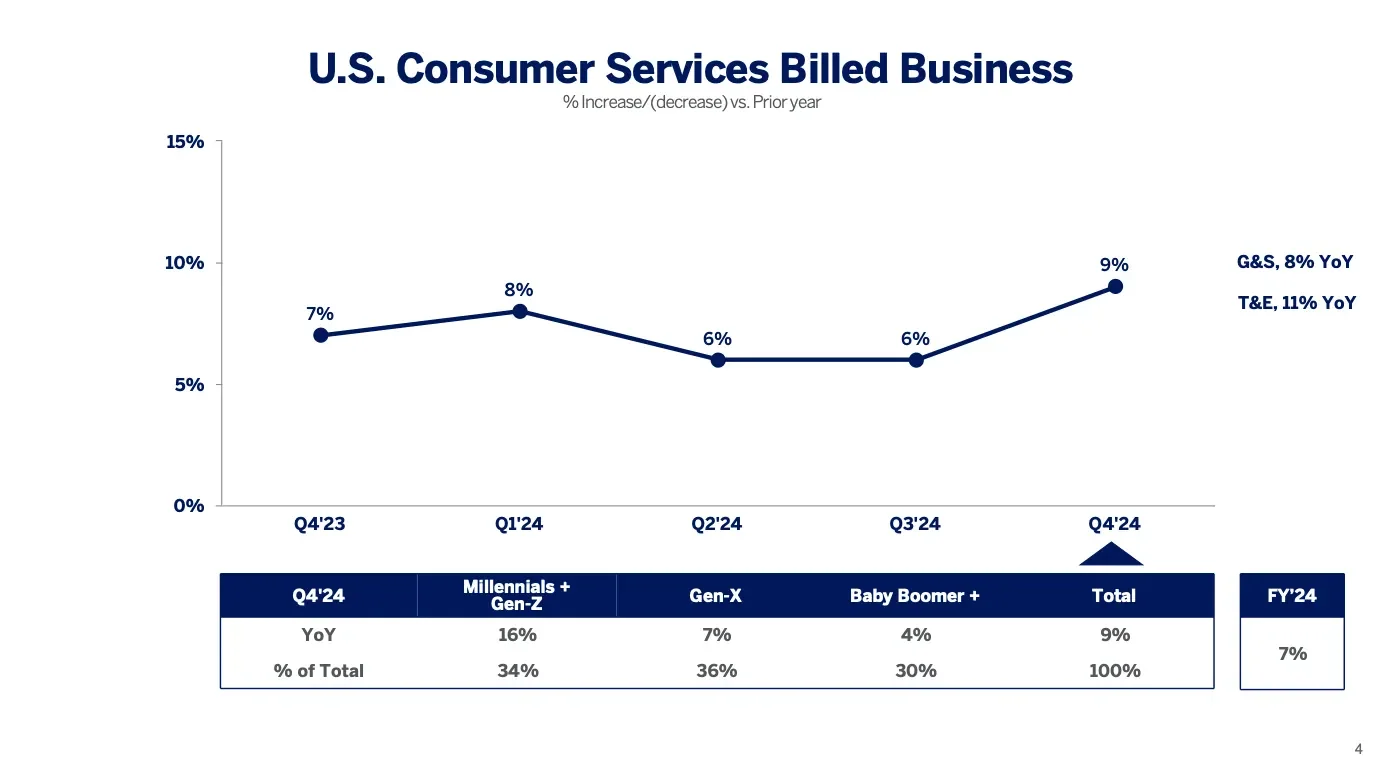
This graph from Amex’s Q4 2024 report shows that the company experienced a 16% year over year growth in business from Millennials and Gen-Z consumers who now make up the second largest portion of their business just two percentage points behind Gen-X and I’m sure that their number will be eclipsed before the end of the decade.
From “Priceless” to “...like an insider”
As I mentioned at the top, the “Priceless” campaign used emotional family and relational experiences as the driving forces to consider a mastercard over Visa or Amex. But now the big three (Amex Platinum, Venture X, and Sapphire Reserve) all use the same tactics to market themselves, mostly leaving the choice to the consumer as no card really stands above the pack unless you are a super user or need a card for a specific use case.
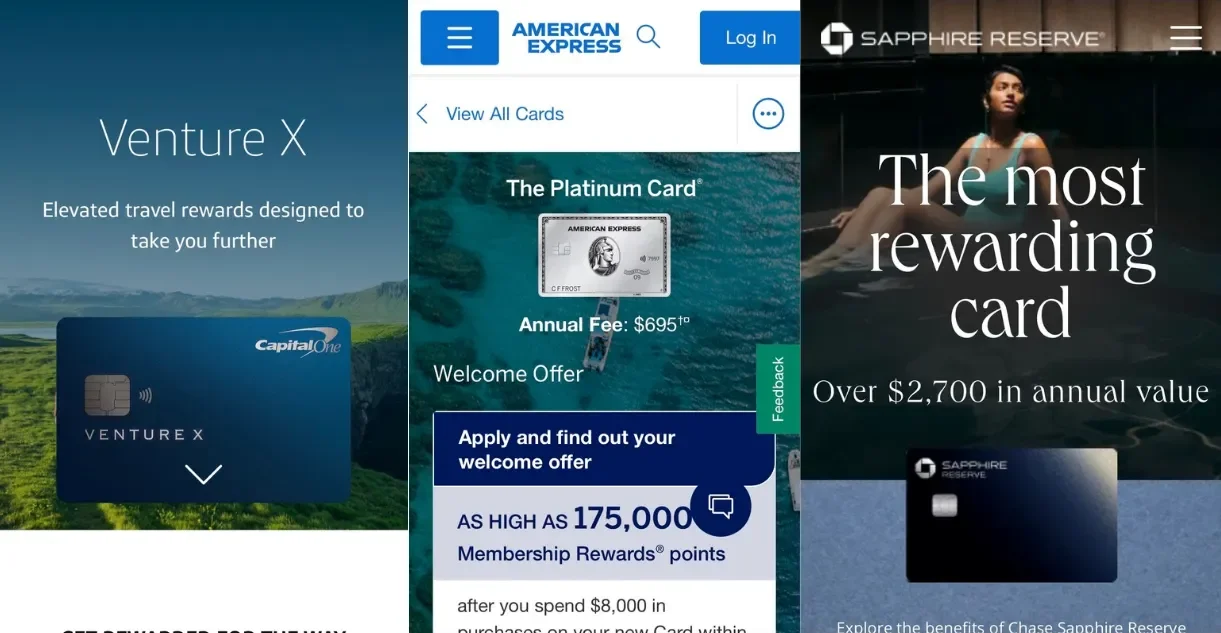
The landing page of each card is virtually the same. Showcasing that their card can put you in beautiful exclusive locations and offer you the most rewards for spending with them. Their commercials do the same as well, showcasing how being a member can get you access to exclusive tasting experiences with Michael B. Jordan or dinner with Jalen Brunson, unforgettable nights in Seoul or reservations at the best restaurant in town.
I haven't been immune to this messaging. My first experience with a high tiered card was right out of high school working a foodservice job before leaving for college. I took the customer's card and dropped it because I wasn't expecting the weight. I asked her a million questions about the card. I felt like I could get one myself cause I swore I had motion from my $8.50/hr 40 hour a week job as an 18 year old. I quickly learned that my lack of real income and credit meant I wasn’t getting anything close to a metal card. I put that dream away until I got the Chase Sapphire Preferred ($99 annual fee) . The metal weight was the biggest selling point and the fee only felt right to be a part of the club. Five years later I graduated to the Venture X because it gave 90% of the perks of the reserved and platinum without having to pay north of $600. And again, the fee wasn’t bothering me in the slightest, because I felt I needed this card for my “lifestyle” and to be fair I was traveling a good bit back then. But I haven’t traveled at all this year and with my renewal lingering, I’m starting to wonder if point stacking in the club is really worth it.
These financial institutions may not be the reason for some of the trends we see in modern culture (I’m sure many would argue otherwise), but they have been some of the best at capitalizing on them and using masterful branding to place themselves as the entry way to an elevated life style and even if you don’t use all your perks you still have the conversation starter of throwing the metal card on the restaurant table and comparing weights with your friends.